Attai Audu Jos
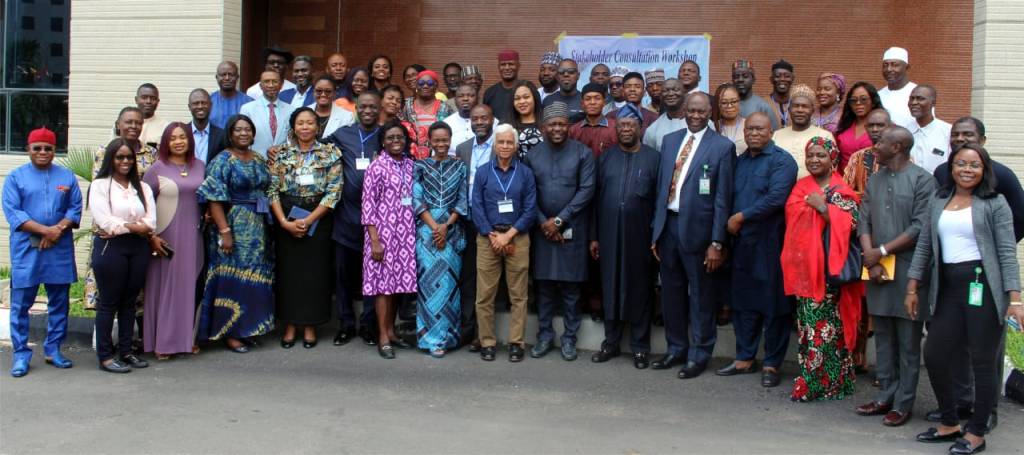
A team of Agric.experts with the support of Federal Ministry of Agriculture and Rural Development have met with stakeholders of the Nigerian Fishery and Aquaculture sector in Abuja and sought for more contributions from the stakeholders before finalizing the policy draft, validating and launching it to operate from 2024 to 2028.
This first ever Fishery and Aquaculture Policy for Nigeria (2024-2028) is being developed by the former Federal Ministry of Agriculture and Rural Development (FMARD) supported by the International Food Policy Research Institute as part of National Policy Strategies (NPS) of the One CGIAR Initiative in collaboration with WorldFish and Agricultural Policy Research Network (APRNet).
During the workshop, concerns were raised about where the new Policy on Fishery and Aquaculture being drafted should be domiciled and where the Fishery and Aquaculture Division will be situated in view of the creation of two new Federal ministries relevant to the divisions and the policy.a
Speaking to newsmen after the event, the Policy Drafting Team Lead, Professor Anthony Ojonimi Onoja, a Professor of Resource and Environmental Economics at the University of Port Harcourt and a Professor Extraordinarius at the University of South Africa, who also is the President of Agricultural Policy Research Network (APRNet) bore his mind on the matter.
According to Professor Onoja , there is no better time to properly situate the Fishery and Aquaculture Division and the new policy on aquaculture and fishery than now.
Professor Onoja
advocated for the divisions of Fishery and Aquaculture to be moved into the Federal Ministry of Marine and Blue Economy where these divisions can optimize their potentials in propelling economic growth and development of the blue economy.
According to him, Aquaculture and fisheries are both operated in marine and other blue resources (freshwater) such as lakes, rivers, pools and ponds) and in oceans too.
” Given that the new Ministry of Agriculture and Food Security needs to focus more on food crops and livestock as well as their derivatives’ supplies to ensure food and nutrition security in the country, the fishery and aquaculture sub-sector risks being crowded out under this ministry”saying already this sub-sector is financially marginalized.

He hinted that the Federal Government of Nigeria under the leadership of His Excellency, Chief Bola Ahmed Tinubu has taken the bold initiative of building a new Ministry of Marine and Blue Economy and charged President Tinubu to use this Ministry as a launch pad for optimal drive to achieve the aspirations of his declaration of a State of Emergency in the Nigerian Food sector.
Professor Onoja noted that It would also be more expedient for the new Policy on Fishery and Aquaculture for 2024-2028 that is
already at an advanced stage of its drafting be domiciled under the Federal Ministry of Marine and Blue Economy.
Speaking on the same issue Dr Ebinimi Ansa, the National President of the Fisheries Society of Nigeria (FISON) and a member of the Fishery and Aquaculture Drafting Team held that “the creation of the Ministry of Marine and Blue Economy is a giant step in the right direction that will lead to creating jobs, providing blue foods from the Fisheries and Aquaculture resources and sustaining livelihoods of their fishers and fish farmers.
” At this time therefore, it is pertinent that the Honourable Minister ensures that a full fledged Department of Marine Fisheries Resources and Aquaculture be created in the Ministry with full compliments of Professionals to work in the Department and ensure that the new National Policy on Fisheries and Aquaculture 2024 – 2028 is given attention and implemented. ‘”
According to him, the policy document covering all areas of Fisheries and Aquaculture provides all that is needed to move the Sector forward with an increased number of value chains that will see a wide variety of indigenous home grown fish species, processed and packaged on our market shelves and on our plates.
“Diversification of the aquaculture production of fin and shellfish species, sea weeds and other marine foods would also be considered as activities to be promoted by the Ministry. “
” In addition, the Ministry through her Research Institutions should explore the possibility of fish cage farming as an energy and water saving system for fish production in the Blue Economy. He stressed

 Kwararafa Reporters